Reviewing the Father’s Day Quote Design for Real Embroidery
As a designer who has spent countless hours digitizing and stitching out thousands of files, I approach every new machine embroidery design with a critical eye. It is not enough for a graphic to look good on a screen; it must translate seamlessly onto fabric, withstand the tension of the hoop, and hold up after washing. Recently, I evaluated the Father s Day Quote Design, Husband, Dad, to determine its viability for client projects and small business inventory. This review breaks down how this asset performs in real-world scenarios, moving beyond simple aesthetics to practical application.
First Impressions and Visual Personality
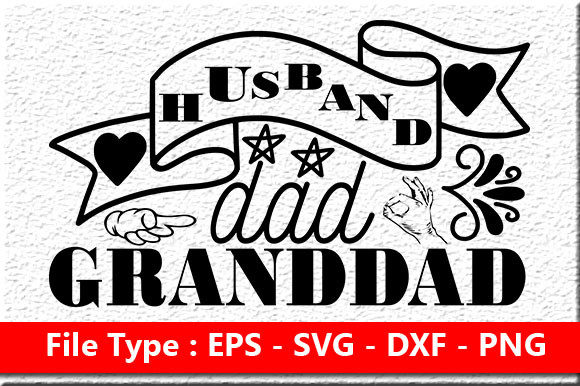
The initial appeal of the Father s Day Quote Design, Husband, Dad, lies in its versatility. Unlike overly complex illustrations that demand high stitch counts and dense fill areas, this design relies on clean lines and readable typography. For an embroidery project, clarity is king. When you are working with thread rather than ink, fine details can get lost, and tiny lettering can become illegible. This design appears to prioritize legibility, which is crucial for personalized gifts where the message is the focal point.
The mood is warm and celebratory without being cluttered. It fits naturally into the Crafts category because it bridges the gap between digital art and tactile creation. As a piece of Graphics intended for physical production, it avoids the trap of being too thin or too dense, suggesting a balanced approach to line weight that should stitch out cleanly on most home machines.
Real-World Application: The Custom Tote Bag Test
To truly understand the value of an embroidery file, you have to imagine it on a specific product. I visualized using this design on a heavy canvas tote bag, a popular item for boutique shops and Etsy sellers. Canvas has a distinct texture, and the weave can interfere with small details. Because this design features bold quote elements, it should stand out well against the textured background of a tote.
Imagine a customer ordering a custom gift for their partner. They want something durable and stylish. Applying this design to a neutral-colored tote creates an immediate emotional connection. The text serves as both decoration and declaration. For a handmade product seller, this means higher perceived value. It transforms a basic utility item into a personalized gift that feels thoughtful and exclusive. The design’s layout allows for easy centering, which simplifies the hooping process and reduces the risk of skewing—a common headache in commercial embroidery.
Versatility Across Product Lines
Beyond tote bags, this design shows promise for custom apparel. On a sweatshirt, the softness of the fleece requires careful attention to stitch density, but the open nature of quote designs usually prevents puckering. It would also work well on a structured cap, provided the curvature is accounted for during digitizing. For baby items, such as a bib or a onesie, the design offers a sweet sentiment that parents love to capture in photos. However, scale is critical here. What looks perfect on a pillow cover might be overwhelming on a small baby garment.
For those running a craft business, having a design that works across multiple categories is essential. You can use the same asset for sweatshirt embroidery, kitchen towels, and even framed hoop art. This flexibility maximizes the return on investment for your digital assets. It allows you to create a cohesive collection for holiday promotions, ensuring brand consistency across your small shop product listings.
Technical Considerations and Stitching Challenges
While the design is promising, there are technical factors to consider before hitting the start button. The description notes that the ZIP file contains EPS, SVG, PNG, and DXF files. It is important to clarify that these are primarily vector and raster graphics formats, often used for cut machines and printing. If you are using this for machine embroidery, you must ensure you have the correct embroidered format (such as PES, DST, or JEF) compatible with your machine, or that you are using software to convert these vectors into stitch data accurately.
If you are converting these vectors yourself, pay close attention to stitch density. Vector lines do not automatically translate to optimal stitch paths. You may need to add underlay stitches to stabilize the fabric, especially if you are working with stretchy materials like jersey knits. A proper stabilizer is non-negotiable here. For light fabrics, a cut-away stabilizer will provide the necessary support to prevent distortion, while a tear-away might suffice for sturdy denim or canvas.
Navigating Fabric and Hoop Constraints
When working with dark fabrics, thread color contrast becomes a major factor. Light threads on dark fabric can sometimes appear sparse if the stitch coverage is not dense enough. Test your thread colors on scrap fabric first. A satin stitch border around the text could help define the edges and improve visibility on darker backgrounds. Conversely, on light fabrics, ensure that any fill stitches are not so dense that they cause the fabric to pucker or the hoop marks to remain visible after removal.
Small hoop sizes present another challenge. If you are stitching on a 4x4 inch hoop, you may need to resize the design. Resizing can alter the stitch density, potentially making thin lines too thick or causing gaps in larger areas. Always check the design in your software’s preview mode after resizing. Look for potential thread breaks in sharp corners or tiny details. If the design includes intricate serifs or small decorative elements, consider simplifying them or increasing their size to ensure they stitch out cleanly.
Commercial Viability and Brand Trust
For Etsy sellers and creative entrepreneurs, the quality of your finished product directly impacts customer trust. A messy stitch-out with loose threads or misaligned letters can damage your reputation. The Father s Day Quote Design, Husband, Dad, offers a professional look that can enhance your brand’s perceived quality. When customers receive a well-executed item, they are more likely to leave positive reviews and return for future purchases.
Using high-quality design assets also saves time. Instead of spending hours creating original artwork, you can focus on perfecting the stitching technique and customer service. This efficiency is vital for scaling a craft business. Additionally, having a versatile design allows you to create attractive printable mockups for your online listings, helping buyers visualize the final product before they purchase.
Final Designer Notes
Before committing to a large batch of production, always run a test stitch. Check the alignment, tension, and overall appearance. Compare the result on both light and dark fabrics to ensure versatility. Verify the licensing terms associated with the download to confirm whether it allows for commercial use of finished items. While the provided files include formats for cut machines and scrapbooking, ensure you have the rights and technical capability to use them for embroidery if that is your primary goal.
In conclusion, the Father s Day Quote Design, Husband, Dad, is a strong candidate for holiday collections and everyday personalized gifts. Its clean aesthetic and adaptable layout make it suitable for a wide range of applications, from embroidered patches to home decor. By paying attention to technical details like stabilizer choice and thread contrast, you can elevate this digital graphic into a high-value tangible product that resonates with customers and strengthens your brand.